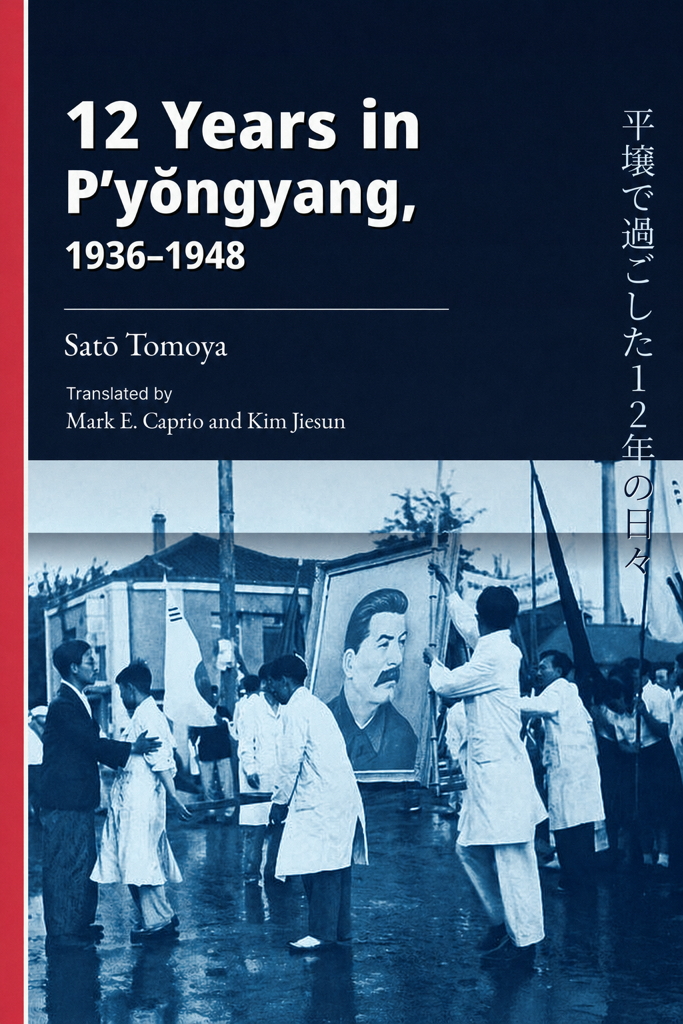
Satō Tomoya’s 12 Years in P’yŏngyang, 1936–1948 is a rare memoir of Japanese childhood, adolescence, and early adulthood in colonial and post-liberation northern Korea. Based on Satō’s own memories as well as entries from his older brother’s diary, the book follows his family’s life in P’yŏngyang from 1936, one year before the outbreak of full-scale war between Japan and China, through Japan’s defeat, Korea’s liberation, the Soviet occupation from 1945, and the family’s repatriation to Japan in 1948.
Satō arrived in northern Korea as the son of an unemployed Japanese technician who had moved there in search of work during Japanese colonial rule. His father found employment at a newly opened mine near Yŏngbyŏn, today known as the principal site of North Korea’s nuclear program. The family’s delayed return to Japan after liberation was tied to the need for Japanese technicians to remain and train Korean successors. Satō’s father, who had been active in Korean literary circles and, in his forties, was drafted into the Japanese army, later became a leading figure in the postwar Japanese community in North Korea, but was eventually re-detained by Soviet authorities and sent to Siberia.
The memoir offers vivid descriptions of Japanese life in P’yŏngyang, especially the world of schools, neighborhoods, wartime mobilization, illness, labor duties, cinema, and the arts. Satō’s account is particularly valuable for the way it captures changing Japanese attitudes toward Koreans and Korean culture across the dramatic transition from empire to defeat, occupation, and repatriation. His experiences as a student and later, at only sixteen, as a teacher in a postwar Japanese school provide a unique window into the lives of Japanese civilians who remained in northern Korea after 1945.
The book also traces the fate of Japanese engineers, technicians, teachers, and families who were unable to return immediately to Japan. The final chapter follows the fate of those left behind, including the seven men sent to Siberia, while the epilogue extends the story into the Korean War, including the deaths of Japanese civilians during U.S. aerial bombing.
First published in Japanese in 2009, the volume is now available in English translation by Mark E. Caprio and Kim Jiesun, with an introduction by the translators.